


Key Takeaways
- Defaulting on a licensed loan is a civil matter, not a criminal one. You are protected by law from harassment, intimidation, or threats.
- Borrowing costs are tightly regulated by the Ministry of Law, ensuring your debt cannot grow indefinitely.
- Early communication with your lender is the most effective way to avoid legal trouble and work towards a more manageable solution.
- Support is available through Credit Counselling Singapore (CCS), including initiatives like the Moneylender Debt Management Programme (MDMP) to help you regain control.
Finding yourself unable to pay a moneylender in Singapore can be an incredibly stressful and isolating experience, especially when reminders start coming in or a due date is approaching. It’s a situation that many may face at some point in their lives for all kinds of reasons—job changes, unexpected expenses, or simply rising costs of living.
So, what can you do when you’re pursued by a licensed moneylender for late payment? What is your next step if you’re unable to pay a moneylender? Keep reading to find out.
What Happens if You’re Unable to Pay a Moneylender in Singapore?
Missing a payment can be anxiety-inducing, but knowing what to expect can help you stay calm and decide on the next best course of action. In Singapore, loans from licensed moneylenders are regulated under the Moneylenders Act. Hence, you can expect the following to happen when you’re unable to pay a moneylender:
- Late Penalties: You will incur late interest (up to 4% on the outstanding amount) and a late fee (up to S$60 for every month of late payment to your licensed moneylender). The law also specifies that the total cost of your loan (principal + interest + late interest + fees) must not exceed 100% of the principal.
- Payment Reminders: The lender will usually reach out via calls or messages to remind you of your outstanding payments and try to work out an arrangement that works for both of you.
- Legal Escalation: If there’s no response, the lender may ultimately take the matter to the civil court.
A common misconception is that missing a payment could lead to arrest. In reality, being unable to pay a moneylender is a civil matter, not a criminal offence. While this is a serious situation, you won’t be jailed or given a criminal record for falling behind on repayments.
What Licensed Moneylenders Can Do When You Can’t Pay
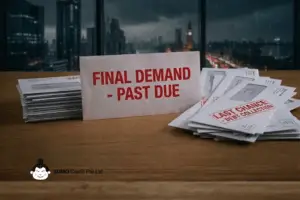
If you’re unable to pay a moneylender, legitimate lenders in Singapore are expected to handle the situation in a professional manner. In most cases, the focus is on finding a workable solution rather than jumping straight into taking legal action against you. Lenders are allowed to:
☑️ Send polite reminders or contact you to understand your situation
☑️ Speak to you at reasonable times (Mon-Fri: 8am-10pm; Weekends & Public Holidays: 9am-9pm) to discuss repayment matters
☑️ Visit your home or workplace to serve you a Letter of Demand
☑️ Take civil legal action if all means to recover debt have been exhausted
What Licensed Moneylenders Cannot Do
It is important to recognise that licensed lenders do not have the liberty to do whatever they wish, even if you have outstanding debt unpaid. The following behaviour is strictly prohibited:
❌ Harassment or threats: Absolutely no abusive language, intimidation, or threats of harm are permitted.
❌ Public shaming: They must not publicise your debt on social media or contact your employer, neighbours, or family members to “shame” you into paying.
❌ Forced entry or seizure: They cannot enter your home or take your belongings without a court order.
❌ Withholding documents: It is illegal for them to retain your NRIC, passport, driving licence, or ATM cards as “collateral” for non-payment.
❌ Demand sensitive information: They must not attempt to obtain sensitive information, such as your Singpass credentials or bank passwords, under any circumstances.
If any of these boundaries are crossed, inform the Registry of Moneylenders and lodge a police report.
First Things to Do if You’re Unable to Pay a Moneylender
If you realise you might be unable to pay a moneylender, the best thing you can do is to speak up ASAP. Avoiding the issue usually makes things worse, while taking early action often opens the doors to negotiation and alternative options.
- Reach out early: Contact the lender as soon as you anticipate repayment issues. Being upfront and honest about your financial situation often makes it easier to work out a temporary arrangement or adjusted repayment plan.
- Check your budget: Go through your income and essential expenses to get a clear idea of what you can realistically afford to repay each month. This helps you figure out a workable plan without overstretching yourself.
- Keep records: Save your messages, emails, and any key conversations. Having everything documented helps avoid confusion and gives you clarity if anything needs to be reviewed later.
Can You Negotiate Your Repayment or Restructure the Loan?
Yes, in many cases, you can. Most lenders are open to adjusting your moneylender debt repayment plan based on your unique circumstances. For example, adjustments might involve extending your loan tenure to make the monthly instalments more manageable. While this can mean paying more interest over time, it can ease immediate financial pressure and help you avoid additional late fees and hefty late interest charges.
When negotiating changes, be realistic about what you can afford each month. It’s advisable to agree on a plan you can consistently stick to rather than commit to an amount that’s unsustainable in the long run.
When Does Late Payment Turn Into Legal Action?
Legal action is usually a last resort for lenders because it involves significant time and resources; lenders generally prefer to resolve repayment issues through amicable discussions first. However, if the borrower is consistently unable to pay a moneylender and refuses to engage in discussions, the situation may be escalated.
The process usually begins with the issuance of a formal Letter of Demand (LOD), which specifies the amount owed and sets a deadline for repayment. If the matter remains unresolved, the lender may proceed to file a claim in the Small Claims Tribunal or the Court, depending on the debt size.
This is why it’s important to take any formal legal notices seriously and respond promptly. This gives you the opportunity to explain your situation and, where possible, arrive at a settlement before a final court decision is made.
Should You Take Another Loan to Repay a Moneylender?
One of the biggest mistakes that borrowers make is “debt stacking”—taking a new loan to pay off an old one. This often leads to a never-ending cycle of debt that eventually becomes impossible to manage.
If you must take out a new loan, make sure it genuinely improves your situation. For example, a debt consolidation loan that consolidates your debt obligations into a single monthly repayment and lowers your total interest costs may be worth considering.
Be especially wary of “ah long” moneylenders, or unlicensed loan sharks, who often target borrowers in urgent need of funds. Unlike licensed entities, “ah long” moneylenders are not regulated—this means that you are likely to be exposed to a series of risks, including sky-high interest and harassment, if you borrow from them.
If you suspect you’re dealing with an unlicensed lender, disengage immediately. Do not make further payments or continue any interactions; instead, call the X-Ah Long Hotline at 1800-924-5664 to report potential loansharking activity. If you’re in immediate danger, call 999.
Related read: What’s the Real Deal With “MAS Licensed Moneylenders”?
Getting Professional Help When You Can’t Pay a Moneylender
If you’re juggling multiple loans and finding it increasingly challenging to meet your repayment demands, it may be time to seek help through a suitable moneylender debt repayment plan:
- Moneylender Debt Management Programme (MDMP): Facilitated by Credit Counselling Singapore (CCS), this programme consolidates your licensed moneylender debts into one manageable monthly instalment, typically over a maximum period of two years.
- Debt Repayment Scheme (DRS): A court-administered option for individuals with debts below S$150,000, allowing you to repay over a maximum period of 5 years without being declared bankrupt.
- Bankruptcy (last resort): Either the creditor or the debtor may file for bankruptcy if outstanding debts amount to S$15,000 or more, and if repayment is no longer possible. Since it’s a formal legal process with significant long-term consequences, it should only be considered after all other options have been exhausted.
Final Thoughts — Take Action Before the Problem Grows
Being unable to pay a moneylender in Singapore can be absolutely distressing, but it’s certainly not the end of the world. By keeping communication open with your lender, understanding what you are legally liable for, and seeking timely professional help, you can move past this financial hurdle with the right support. Just as importantly, always ensure you’re dealing with licensed lenders.
If you are still weighing your options, you are welcome to contact us directly or read our reviews to better understand how we support our clients. Whenever you’re ready, send in your application online to get started on your borrowing journey with us.
Unable to Pay a Moneylender in Singapore: Frequently Asked Questions
Can a licensed moneylender harass me if I’m unable to pay a moneylender?
No. Any form of harassment, intimidation, or public shaming is illegal under Singapore law, even if you’re unable to pay a moneylender.
Will late payment to a licensed moneylender affect my credit score?
While licensed moneylenders do not rely on traditional credit scores from Credit Bureau Singapore, your borrowing history with licensed lenders is recorded with the Moneylenders Credit Bureau (MLCB). Late payments to licensed moneylenders will be reflected in your MLCB report, which can, in turn, affect your future borrowing.
Can I go to jail for being unable to pay a moneylender?
No, defaulting on a loan is a civil matter and not a criminal offence. Jail terms only apply in cases involving criminal activity, such as illegal lending or harassment-related offences.