


Key Takeaways
- A legitimate licensed moneylender must follow specific rules when advertising, verifying borrowers and granting loans.
- Unsolicited SMS, WhatsApp messages, calls or social-media loan offers should always be treated as warning signs.
- A request to pay GST, processing fees or other charges before loan disbursement is a major red flag.
- Borrowers should verify a lender against the official Registry of Moneylenders rather than relying on contact details supplied by a stranger.
- Scammers may impersonate genuine licensed moneylenders, so always check the exact business details and official contact channels.
- If you suspect a scam, stop communicating, avoid further transfers and report the incident promptly.
When money is tight, a fast-cash offer can be super tempting—we totally get it. Unfortunately, scammers know this and may use convincing websites, advertisements or fake representatives to make a loan scam look legitimate.
Some loan scams in Singapore even involve impersonating genuine licensed moneylenders like Sumo Credit, or even government officials. Knowing the common loan scam red flags can help you spot a suspicious offer before it costs you money or puts your personal information at risk. Read on to find out exactly what to watch for!
What Is a Loan Scam?
How Loan Scams Work
A loan scam usually starts with an attractive offer. You may see an advertisement, receive an unsolicited message or be contacted by someone claiming to represent a moneylender.
The scammer may then:
- Promise easy approval or unusually attractive loan terms.
- Ask for personal or financial information.
Persuade you to transfer money elsewhere before releasing the loan. The promised loan may never even arrive. In more elaborate loan scams, victims may even obtain a genuine loan before being manipulated into handing the money to the scammer.
This is exactly why knowing the warning signs of illegal moneylenders and other fraudulent operators matters—before you share your details or agree to anything!
Why Loan Scams Can Be Difficult to Recognise
Not every Singapore scam looks suspicious at first. Fraudsters may copy a company’s name, logo or website and use convincing customer-service messages to appear legitimate.
They may also create urgency by promising fast approval or claiming that an offer is available for only a short time. When you urgently need money, that pressure can make it a lot harder to pause and verify the offer.
Common Types of Loan Scams in Singapore
⚠️ Fake Licensed Moneylender Scams
Scammers may impersonate genuine licensed moneylenders by copying their business names, websites or branding. The Registry of Moneylenders and the Singapore Police Force (SPF) have warned about scammers using SMS, WhatsApp messages, websites and social-media accounts to pose as licensed moneylenders.
Some fake websites may also be designed to collect personal information such as your NRIC number, address and contact details.
⚠️ Upfront Fee Scams
Another common tactic is to demand payment before a loan is disbursed. The scammer may describe the payment as GST, an insurance fee, a processing fee, a lawyer’s fee or an account-clearance charge.
Licensed moneylenders may charge permitted fees, but these should never be confused with demands for upfront payment to release a loan!
⚠️ Government Official Impersonation Loan Scams
This type of Singapore scam can be particularly damaging because victims may end up owing money on a genuine loan.
📝 In June 2026, SPF warned about cases where scammers impersonated telco reps before transferring victims to people posing as officials from MinLaw or MAS. Victims were instructed to obtain loans from licensed moneylenders and transfer the proceeds to a supposed “safe account”.
⚠️ “Fast Cash” Social Media Loan Scams
Some loan scams in Singapore use advertisements or social-media accounts to maliciously target people looking for quick financial help.
As a matter of fact, licensed moneylenders face strict restrictions on how they can advertise, so unexpected loan solicitations are an important warning sign to not engage.
7 Warning Signs of a Loan Scam
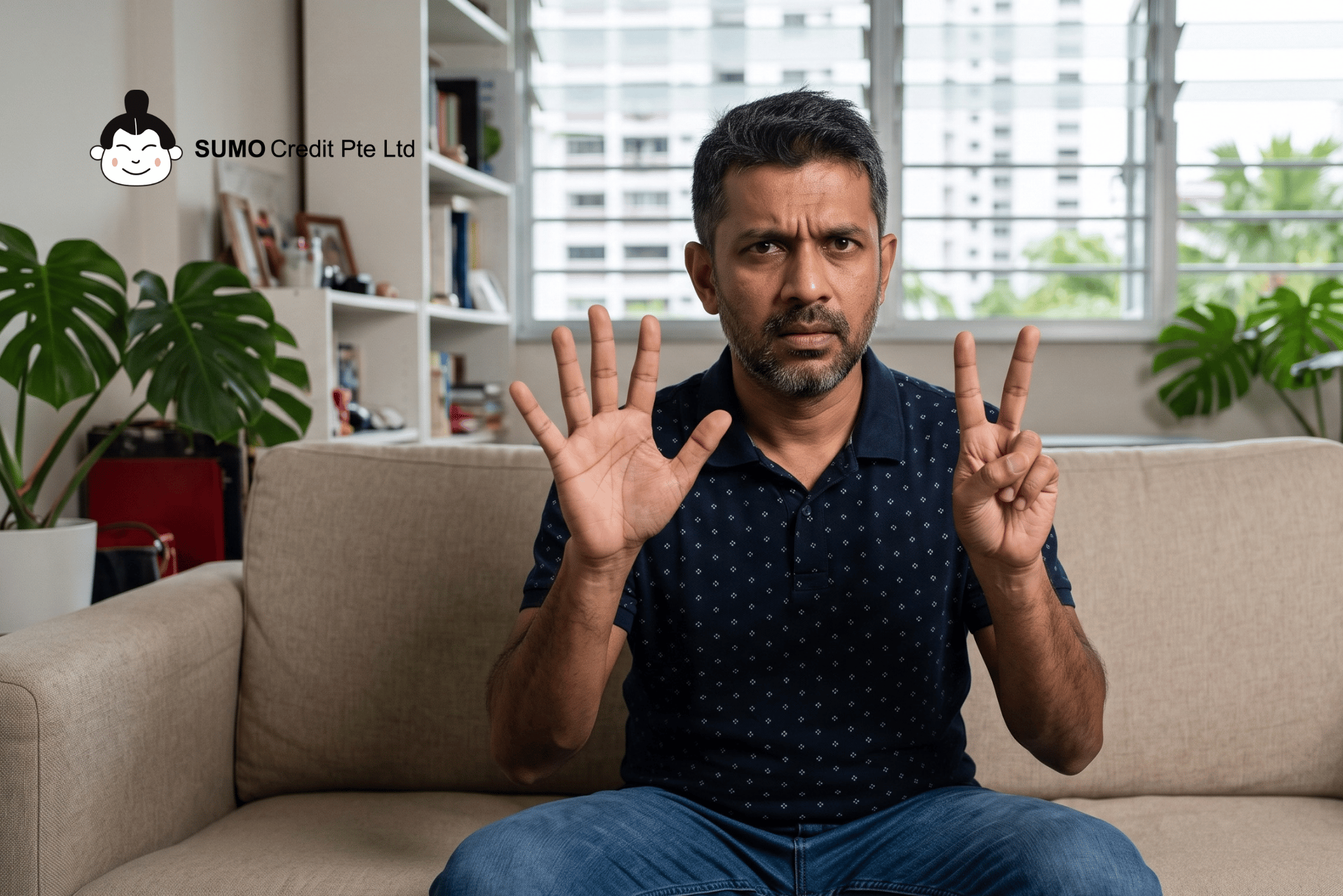
#1 You Receive an Unsolicited Loan Offer
Licensed moneylenders are not allowed to solicit loans through unsolicited text messages, phone calls or social media platforms.
📝 Note: An unsolicited loan offer—an unexpected SMS, WhatsApp message, phone call or social media message offering a loan—is a warning sign! Do not respond before verifying the lender independently.
#2 The Lender Is Not on the Official Registry
Before proceeding with a loan, check the business against the official Registry of Moneylenders. If the lender isn’t listed, don’t proceed!
📝 Note: Always verify the lender’s details against the official Registry before continuing with a loan application.
#3 You Are Asked to Pay Before Receiving the Loan
Be cautious if someone tells you to transfer money before your loan is disbursed. Common excuses include GST payments, processing fees, insurance fees, security deposits or account-activation charges.
A request for an upfront payment to release a loan is one of the clearest loan scam red flags.
📝 Note: Never transfer money upfront simply because someone claims it is required to release your loan.
#4 You Are Told the Entire Loan Can Be Completed Online
A lender claiming that you can complete the entire loan transaction remotely should raise serious concerns.
Licensed moneylenders must meet borrowers in person at their approved place of business to conduct physical face-to-face identity verification before granting a loan. A fully online loan transaction isn’t permitted, period.
📝 Note: An online enquiry may be possible, but you can’t complete the loan transaction entirely online.
#5 You Are Pressured to Act Immediately
Watch out for messages such as:
- “Offer expires today.”
- “Transfer now.”
- “Pay before approval.”
- “You will lose your loan if you wait.”
Pressure can make you act before you have time to properly verify the lender or understand the loan terms.
📝 Note: Don’t let urgency rush you into a financial decision! Take time to verify the lender and understand the agreement before signing.
#6 Someone Claims to Be a Government Official and Tells You to Borrow
Be especially cautious if someone claiming to represent MinLaw, MAS, the Police, or another government agency tells you to take out a loan.
📝 Note: Government officials will never ask you to take out a loan from a licensed moneylender or transfer money to a “safe account”.
#7 You Are Asked to Hand Over Banking Access or Sensitive Information
Never give another person control of your financial accounts. This includes:
- Bank login credentials
- OTPs
- PINs
- Singpass credentials
- Access to your banking account
Scammers may use these details to take control of accounts or make unauthorised transactions.
📝 Note: Keep your banking and Singpass credentials private—always.
What to Do if You Think You Are Being Scammed in Singapore

Spotting a suspicious offer is important, but what you do next matters just as much.
Step 1 — Stop the Transaction
Don’t transfer additional money, hand over cash or continue negotiating with the suspected scammer.
If you haven’t made a payment, stopping the interaction early can genuinely prevent the situation from escalating.
Step 2 — Secure Your Accounts
If you have disclosed banking information or believe an account has been compromised, contact your bank right away!
Change affected credentials and review your account activity for suspicious transactions. You may also strengthen your account security with measures such as transaction limits and two-factor authentication.
Step 3 — Preserve Evidence
Keep screenshots of:
- Messages and advertisements
- Phone numbers
- Website addresses
- PayNow or bank-transfer details
- Payment records
- Company information
- Any documents sent to you
This information can help you file a scam report in Singapore or explain what happened to your bank or the authorities.
Step 4 — Report the Scam
If you’re unsure about a suspicious message, number or link, the ScamShield app can help you check it. The ScamShield Helpline at 1799 is also available 24/7 for scam-related enquiries.
You can use ScamShield to report suspicious calls, messages and websites. However, a ScamShield report is not an official police report. If you have fallen victim to a scam, make a separate police report through the I-Witness portal!
Wondering how to report scam activity or how to report a scam number? ScamShield provides reporting options for suspicious numbers and messages. For urgent police assistance, call 999. Suspected unlicensed moneylending activities should also be reported to the Police.
Related read: How to Lodge a Complaint Against a Moneylender
How to Stay Safe From Loan Scams in Singapore
A few simple habits can make it harder for scams in Singapore to catch you off guard.
Verify lenders through the official Registry of Moneylenders, not via links, numbers, or sites from unsolicited contacts. Even if you need cash fast, pause to confirm legitimacy and review terms. Keep banking and Singpass private—never share OTPs, passwords, or PINs.
Consider using the ScamShield app to check suspicious calls, messages and links. The dedicated ScamShield Helpline (i.e. scam hotline), 1799, is handy for scam-related enquiries round the clock.
Before committing to a loan, make sure you fully understand:
- Who the lender is
- The total cost of the loan
- The repayment schedule
- Where the transaction will take place
- What documentation you will receive
A few minutes of checking can be worthwhile when the alternative is dealing with a costly loan scam.
Loan Scam vs Licensed Moneylender: What’s the Difference?
| Loan Scam | Licensed Moneylender | |
| Appears on Registry | May be absent or impersonate another lender | Listed on the official Registry |
| Unsolicited loan offers | Common tactic | Not permitted |
| Upfront payment before disbursement | Common tactic | Not allowed |
| Face-to-face verification | May be skipped or avoided completely | Required |
| Loan documentation | May be fake or absent | Formal loan documentation |
| Identity | May impersonate another business | Verifiable through official sources |
| Purpose | Obtain money or sensitive information | Provide regulated, accessible lending solutions |
☝️ Tip: The key difference is whether you can independently verify who you are dealing with and whether the transaction follows the applicable rules for licensed moneylenders.
Final Thoughts: Check Before You Borrow

A loan offer that looks convenient isn’t necessarily legitimate. Whether it arrives through a message, advertisement or unexpected phone call, take time to verify who is behind it before sharing information or transferring money.
The safest approach is simple: pause, verify and check before you commit. If something doesn’t add up, stop the transaction and seek advice rather than taking a risk.
Looking to borrow? Sumo Credit encourages borrowers to fully understand the loan terms, verify the lender and make an informed decision before committing; we’re in the business of helping you get the right loan for your unique circumstances responsibly. You can learn more about us by applying for a loan or contacting our genuinely friendly team through our official channels—we’re happy to help!
FAQs About Loan Scams in Singapore
How can I check if a loan offer is legitimate in Singapore?
Check the lender against the official Registry of Moneylenders and make sure the business details match. Never rely solely on contact details supplied by an unsolicited caller or message.
Do licensed moneylenders ask for upfront fees?
No! Licensed moneylenders cannot request borrowers to make payment before loan disbursement to secure the release of a loan. They may impose permitted charges, including an administrative fee of up to 10% of the principal when a loan is granted, subject to the applicable rules.
Can I get a licensed moneylender loan completely online?
Not really. Licensed moneylenders must meet borrowers in person at their approved place of business to conduct physical face-to-face identity verification before granting a loan. A fully online loan transaction is not permitted!
How should I report a scam call in Singapore?
If you are unsure whether a call is a scam, contact the ScamShield Helpline at 1799, which operates 24/7. You can also use the ScamShield app to report suspicious calls or messages. If you have lost money, make an official police report as well. For urgent police assistance, call 999!